By October, most fall forestry decisions on a Montana property come down to one question: is the ground still workable before winter? That question matters, but it is not the only one.
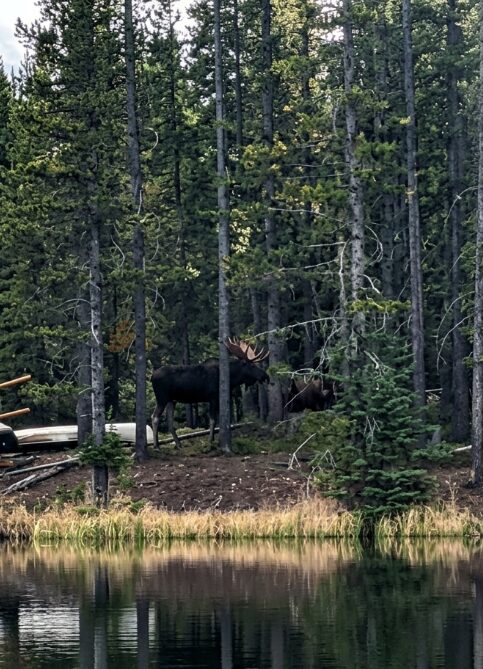
October is also when elk move down from high country. Snow, thinning forage, and colder nights push animals that summered in higher basins and timbered slopes toward lower, familiar seasonal ground. They don’t travel on a fixed date or in a straight line. They follow terrain, cover, and habit, which is why elk movement should factor into fall planning before any treatment begins.
Landowners usually approach fall work practically. Which trees should be thinned? Where should ladder fuels come out? Can defensible space be improved before the first heavy snow? These are essential questions for wildfire mitigation in Montana, but a property is more than a fire risk map. A drainage, bench, opening, or stand of dense cover can serve more than one purpose. Dense cover near a drainage may be travel or bedding habitat even if it reads as ladder fuel on paper. An open stand may improve defensible space while also supporting forage and movement. The real question isn’t remove or leave. It’s what this specific ground is doing for fire behavior and wildlife, and whether treatment can serve both.
Montana Fish, Wildlife and Parks treats seasonal ranges and movement corridors as core to wildlife conservation, and its wildlife movement strategy recognizes private lands and connected habitat as vital to that work. FWP’s elk tracking projects reinforce the same point: wildlife movement does not stop at a property line. On the ground, elk use cover, openings, drainages, benches, ridges, and transitions between forest types, and their routes concentrate where terrain and vegetation make travel practical. That doesn’t mean every dense stand should stay untouched. A quiet stand far from a road functions differently than a similar one beside a driveway, and a strip of cover along a drainage may need a different prescription than a dense pocket near a structure.
That’s why Firebreak starts with a Living Forest Plan, not a chainsaw. A field assessment looks at forest health, wildfire exposure, defensible space, access, soil and drainage, and wildlife movement together. Landowners often already know where elk travel: tracks along a fence line, browsed vegetation near a drainage, bedding beneath mature cover. Those observations get weighed alongside mapping, professional forestry judgment, and FWP information. The result is a phased roadmap showing where treatment should happen first, where lighter treatment or retained cover makes more sense, where fuels reduction and wildlife movement support each other, what access constraints affect timing and method, and where work could coordinate with neighboring properties.
When a corridor is identified, treatment should respond to it. That often means starting near structures, roads, and previously disturbed ground, then using lighter, more selective work where cover matters most. A good prescription creates a mosaic, with some areas opened up, some thinned lightly, and some retained for cover and continuity. The property gets safer without turning a travel route into an obstacle.
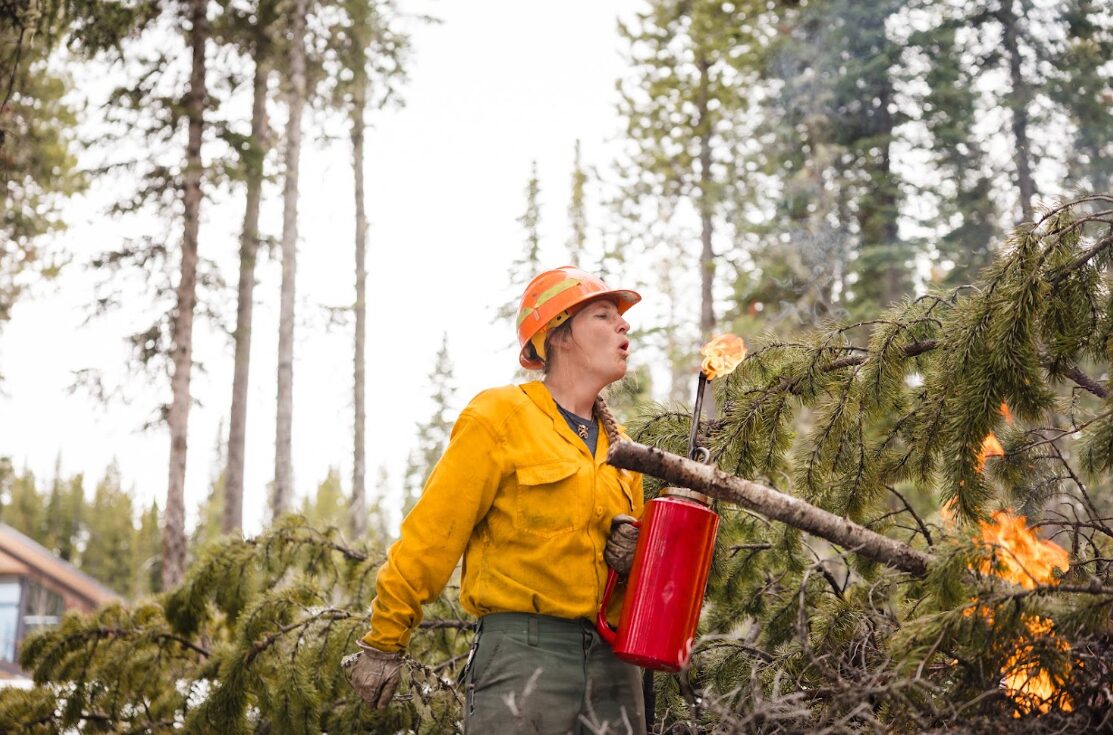
October conditions can shift quickly. Before mechanical work or burning, check Montana DNRC current fire information, review local restrictions and permits, and work from a clear burn plan with qualified crews. Current fire weather guidance is available through the NWS Montana fire support page.
If you’re not sure how wildlife movement fits into your property’s treatment plan, a Living Forest Plan is where that conversation starts for landowners in Big Sky, Bozeman, and across Montana.
Sources and further reading: Montana FWP Strategy for Wildlife Movement and Migration, Montana FWP Elk Tracking Projects, Montana FWP Role of Private Lands, Montana DNRC Current Fire Information, National Weather Service Montana Fire Weather Support