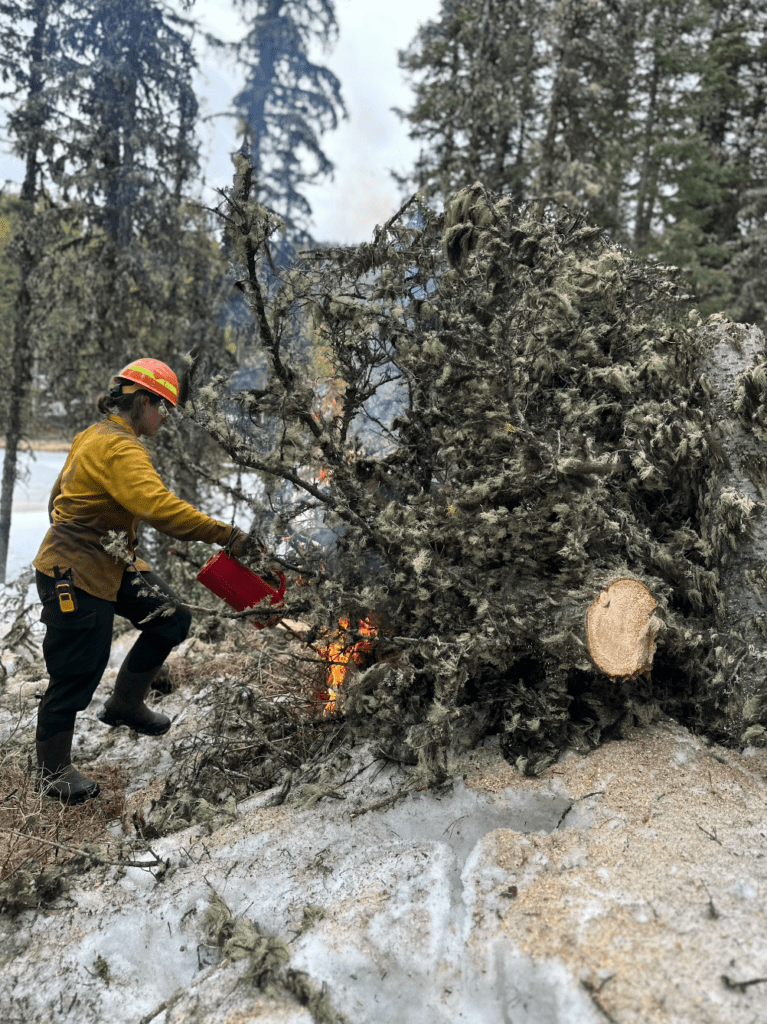
A pile of slash does not look like much. From the road it is just a pile of brown limbs and brittle wood, often half-hidden in the trees. Most people drive past one without registering what it is. Most people, if they think about piles at all, think of them as something messy. Leftover. Trash from a job.
That is not what a pile is.
A pile is a record. Every branch in it represents a decision. A tree that needed more space to grow. A young one crowding an older trunk. A snag too close to the home. A ladder of fuel that would have carried flames from the ground into the canopy in the wrong season. Every cut was a judgment. Every piece on the ground is a small piece of risk that has already been moved out of the forest.
When we work on properties across Big Sky and the Gallatin, we are constantly making these choices. We look at the Douglas-fir and the Lodgepole pines and we ask what the land needs for the next twenty years. The slash that accumulates is the physical manifestation of that strategy. What looks like waste is actually a long quiet inventory of work.
But the work is not finished until the pile is gone.
The Danger of the Unfinished Pile
A pile left on the ground is not neutral. Over time it dries. The fine fuels at the top become tinder. The base settles. The whole structure becomes the most flammable object on the property. If a wildfire moves through before the pile has been dealt with, that pile is the first thing to ignite and the longest thing to burn.
When a wildfire interacts with a dry slash pile, the heat produced is intense and sustained. This localized heat can damage the soil profile and the roots of the very trees we are trying to protect. Leaving piles is not stewardship. It is delay. We believe that holding the saw and the responsibility means following through until the hazard is completely removed.
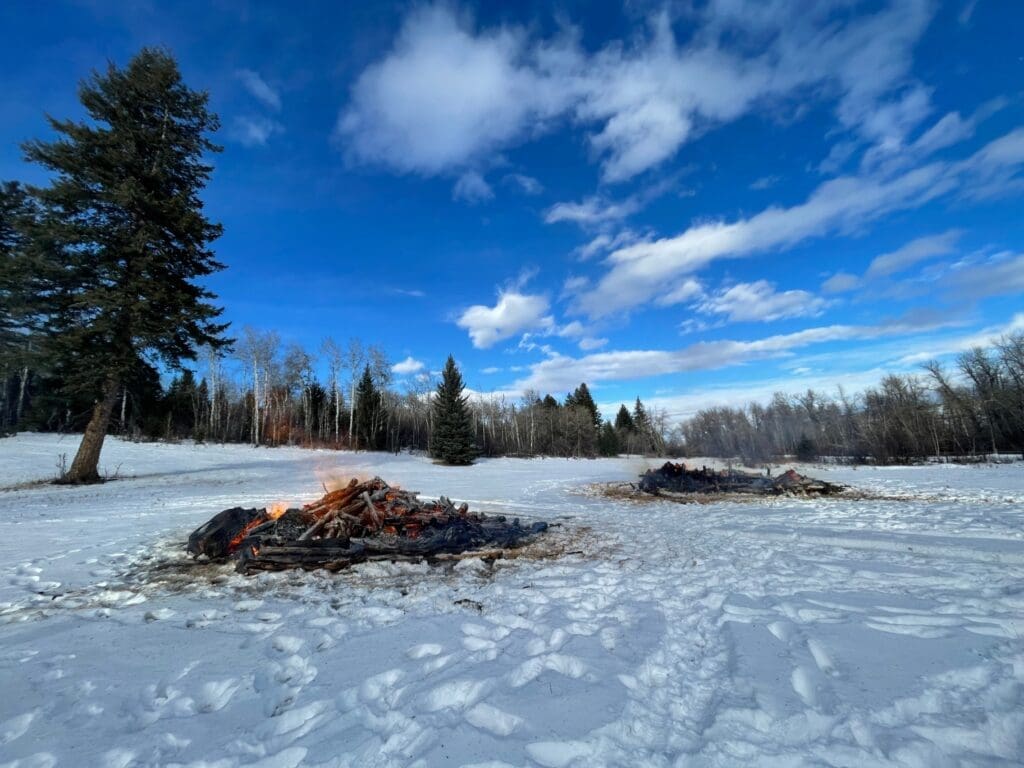
Burning with Technical Precision
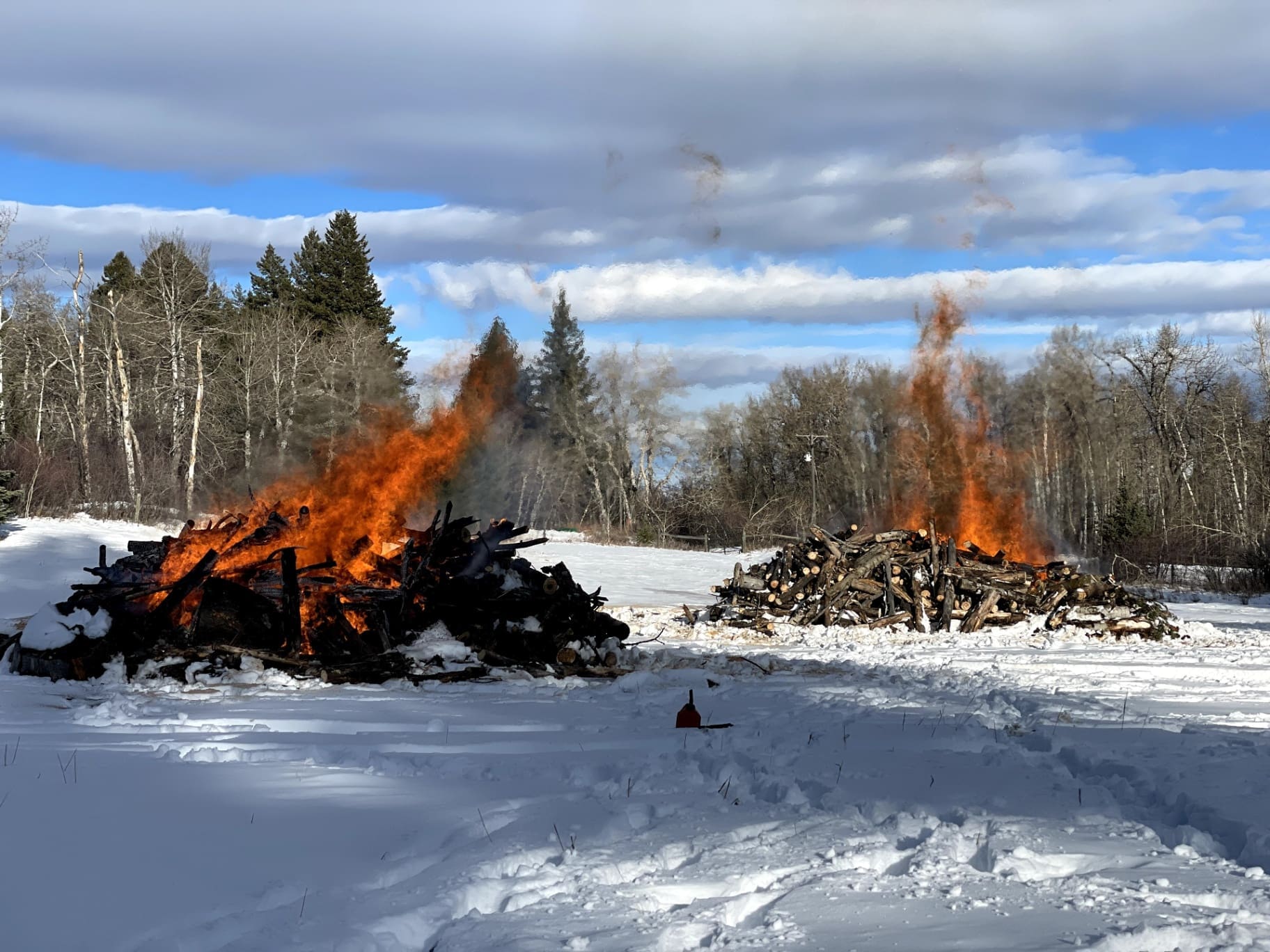
Burning a pile well is its own kind of work. We do not burn when it is easy. We burn when conditions are right. That is rarely the same thing. The right window often comes in winter, or in early spring, when the surrounding forest is wet, when snow holds the perimeter, when the air is still enough to keep smoke moving the right direction but not so still that it pools.
We watch relative humidity with care. We watch wind speed and direction. We watch temperature. We watch the fuel itself, how dry it is, how it is stacked, how it will behave when the flame reaches the heart of it. In Montana, we coordinate closely with the Department of Environmental Quality and local districts like the Big Sky Fire Department to ensure every burn day is safe and compliant.
A pile that is built right will burn down to clean ash. A pile that was built poorly will smolder for days, hold heat in places it should not, and create problems for whoever is responsible for it. We aim for a hot, clean burn that leaves behind only the nutrients the soil needs.
The Anatomy of the Pile
The building of the pile matters as much as the burning. We have spent years refining how we build them. Where they sit on a property. How material is arranged inside them so air can move through. How big they are allowed to get before they become unmanageable.
The shape of a pile is not arbitrary. We build them in a conical fashion to shed moisture and snow while keeping the fine fuels at the core protected. This structure allows for a quick, efficient ignition. It is the difference between a controlled burn that does what it should and a burn that fights you the entire time.
There is technical depth in pile burning that most operators move past quickly. The piles get built, the piles get burned, and the work moves on. We have not been able to move on from them. On large properties in Big Sky, on multi-year forest management plans across the Gallatin, the volume of slash generated is significant. The piles add up. If they are not handled with the same rigor as the thinning that created them, the work is unfinished.
Restoration Beyond the Property Line
This is also why pile burning matters beyond the property line. Done at scale, with the right protocol, pile burning is one of the most effective tools we have for reducing wildfire risk across a landscape. It does what the natural fire cycle used to do in places where unplanned fire is no longer safe.
When we talk about forest health and resilience, we are talking about returning nutrients to the soil. Pile burning clears the duff so seeds can reach mineral ground. It moves a forest from a state of accumulated fuel back toward the conditions it was built to thrive in. It is an essential part of wildfire preparedness and mitigation.
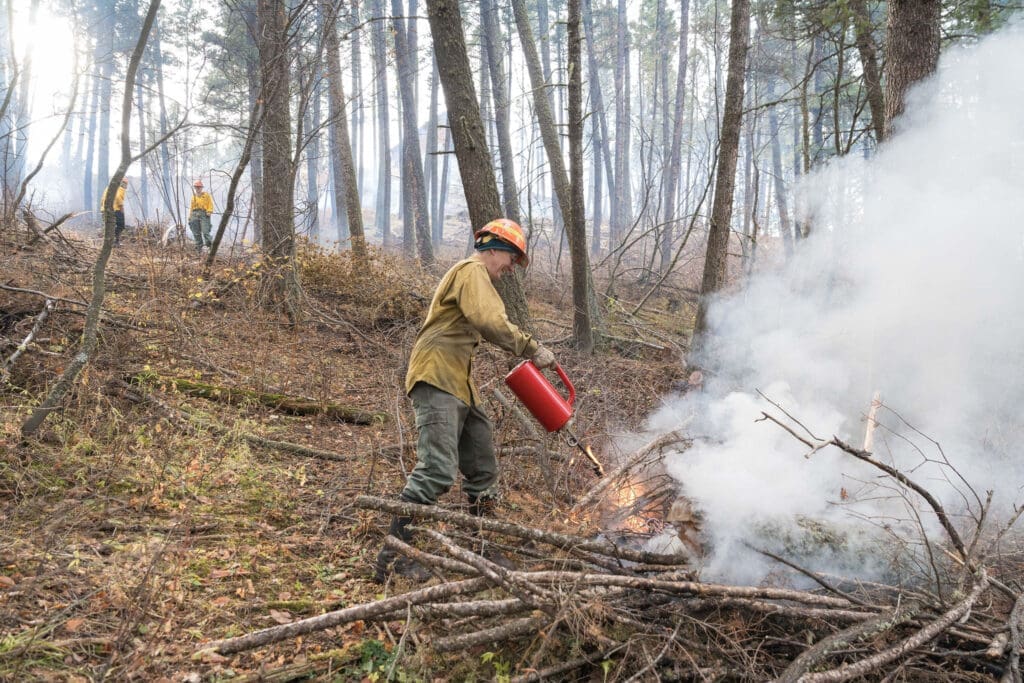
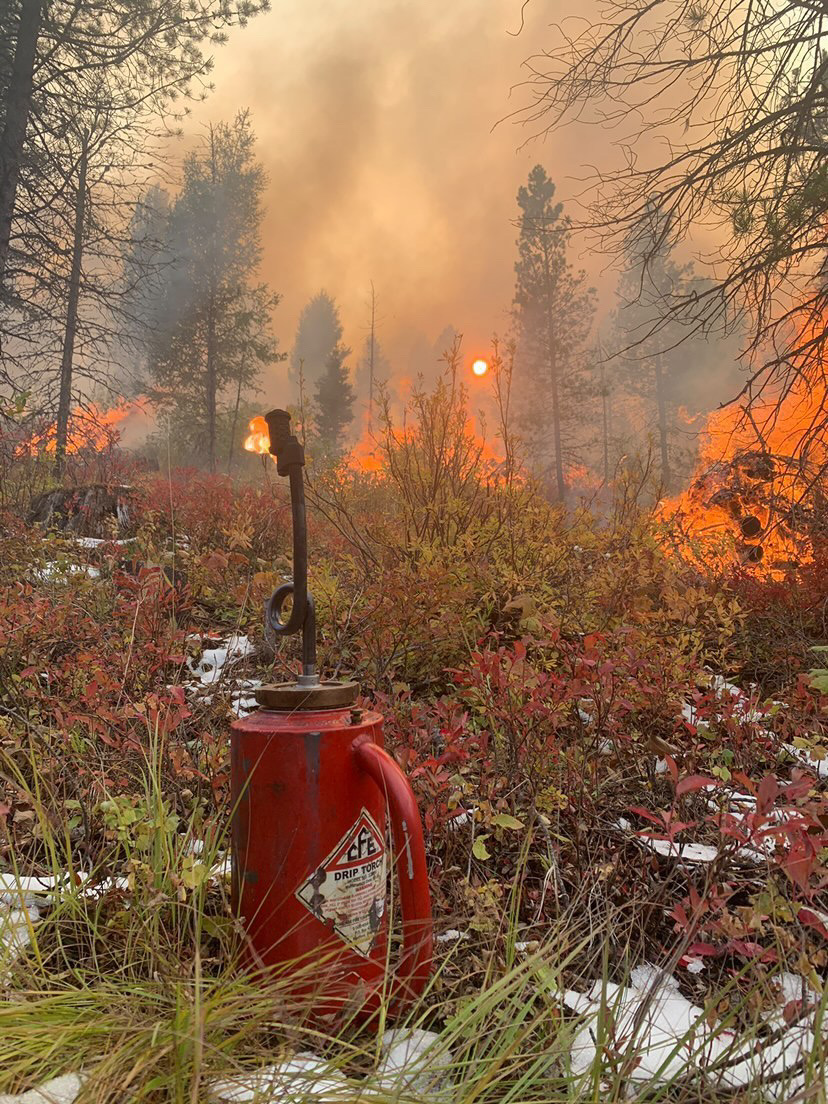
It does not look dramatic. From the outside, pile burning often looks like a few people standing near a small steady flame, watching, adjusting, waiting. That is exactly what it should look like. The drama belongs to wildfire. Pile burning is the quiet opposite. It is a moment when fire is doing exactly what it should.
The Quiet Act of Stewardship
A finished pile is a small act of restoration. The ground beneath it is opened up. The fuel that would have fed an unplanned fire is gone. The forest around it has one less hazard sitting at its edge. Multiply that by hundreds of piles across thousands of acres, and the cumulative effect is real.
Pile burning is not glamorous work. It is winter work. It is patient work. It is work that asks you to stay with something long after the saws have stopped running. It requires us to stand in the cold and watch the embers until they are cold.
But it is some of the most important work we do.
A pile is never just a pile. It is a chapter of a longer story about how a piece of land gets cared for over time. The burning of it is the closing of that chapter, so the next one can begin. It is how we ensure that the land we love remains vibrant and protected for the decades to come.