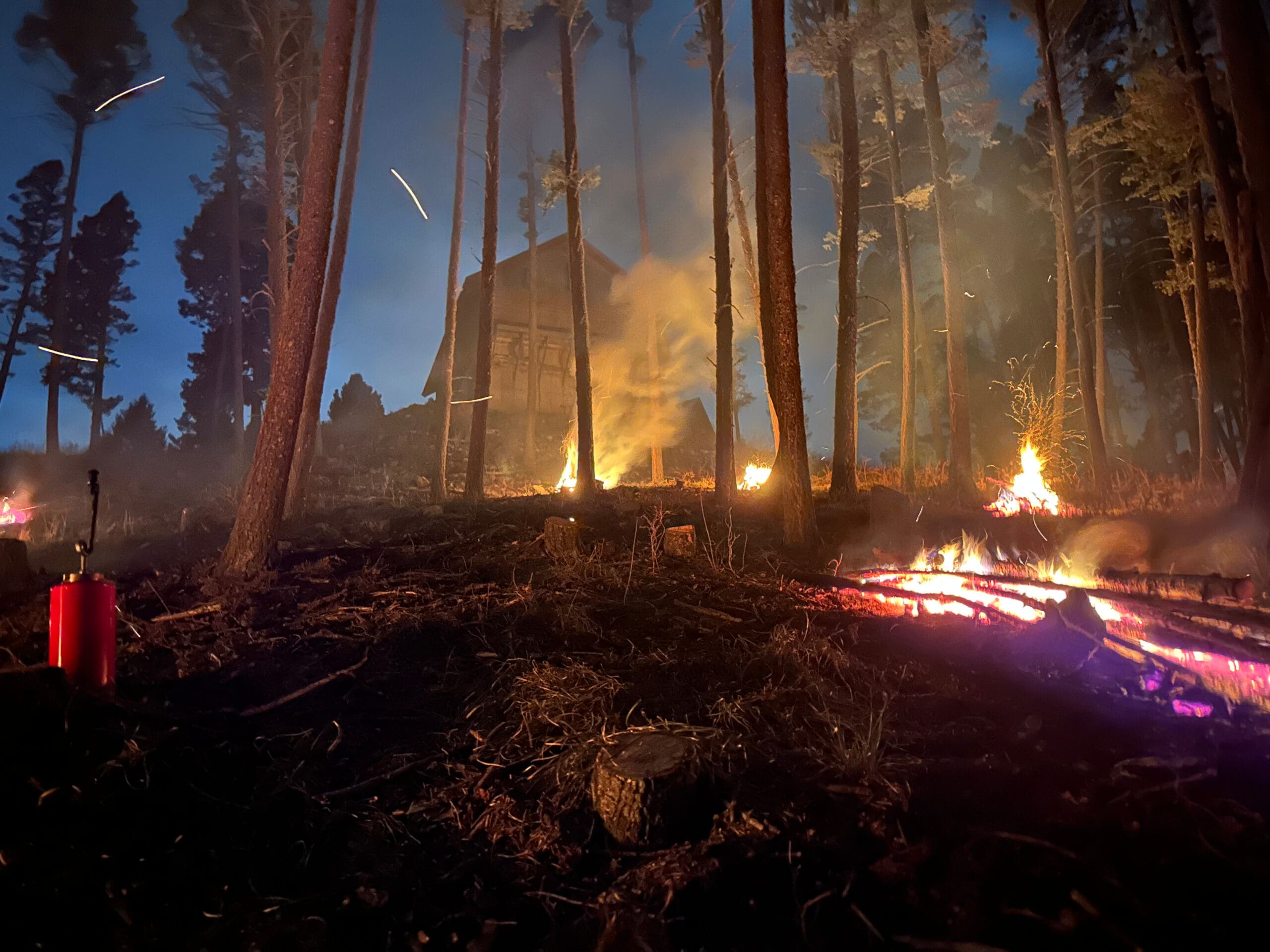
Leadership in fire rarely announces itself.
It is not loud. It does not posture. Most of the time, it shows up as competence under pressure and decisions made when there are no perfect options. In wildland fire, leadership is often quiet, physical, and earned minute by minute.
I learned early that credibility in this work comes from doing the job well. Carrying your weight. Knowing your tools. Paying attention. Taking responsibility when things go sideways instead of deflecting it.
Being a woman in fire adds another layer to that reality, whether you want it to or not.
There is a particular kind of visibility that comes with stepping into spaces that were not built with you in mind. You are watched more closely. Mistakes feel heavier. Success is sometimes attributed to luck instead of skill. None of this is unique to fire, but fire makes it very clear, very fast.
What surprised me was how little any of that mattered once the work began.
Fire does not care who you are. It responds to conditions. Weather. Fuel. Terrain. Decisions. The same is true of leadership. You can talk about it endlessly, but at some point you have to act. And those actions either hold or they don’t.
I did not learn leadership from titles. I learned it from the field.
From watching people who stayed calm when plans unraveled.
From people who listened more than they talked.
From people who were willing to change course when new information came in.
From people who took responsibility for their crews instead of managing them from a distance.
Those lessons stayed with me long after I left the fireline.
When I started Firebreak Management, I did not set out to prove anything about gender or leadership. I set out to do good work and to build a company that treated land, people, and responsibility seriously.
That meant showing up prepared. It meant making decisions even when they were unpopular. It meant being willing to say I don’t know yet and then go learn. It meant building systems that supported crews instead of burning them out. It meant choosing restraint when speed would have been easier.
Leadership in this field is not about dominance. It is about clarity.
Clear expectations.
Clear communication.
Clear accountability.
It is also about care. Care for the people doing the work. Care for the land being touched. Care for the consequences of every decision, especially the ones that ripple outward beyond a single project.
I have worked in fire. I have worked in EMS. I have led crews in conditions where stress is not theoretical. Those experiences shape how I lead now. They make me less interested in optics and more interested in outcomes.
They also make me deeply aware of how responsibility compounds.
When someone hires Firebreak, they are not just hiring a contractor. They are trusting us with land that matters to them. With homes. With ecosystems. With decisions that affect firefighters they may never meet.
That trust is not something I take lightly.
Being a woman in this work has sharpened that awareness rather than softened it. It has made me more attentive, not more cautious. More deliberate, not less decisive. It has taught me to hold confidence quietly and to let the work speak first.
Leadership, at its best, creates space.
Space for crews to do their jobs well.
Space for land to recover and function.
Space for better decisions under pressure.
That is the kind of leadership fire taught me.
And it is the kind I carry into this work every day.



https://shorturl.fm/fCb5Z