Most people come to wildfire mitigation with a checklist in mind.
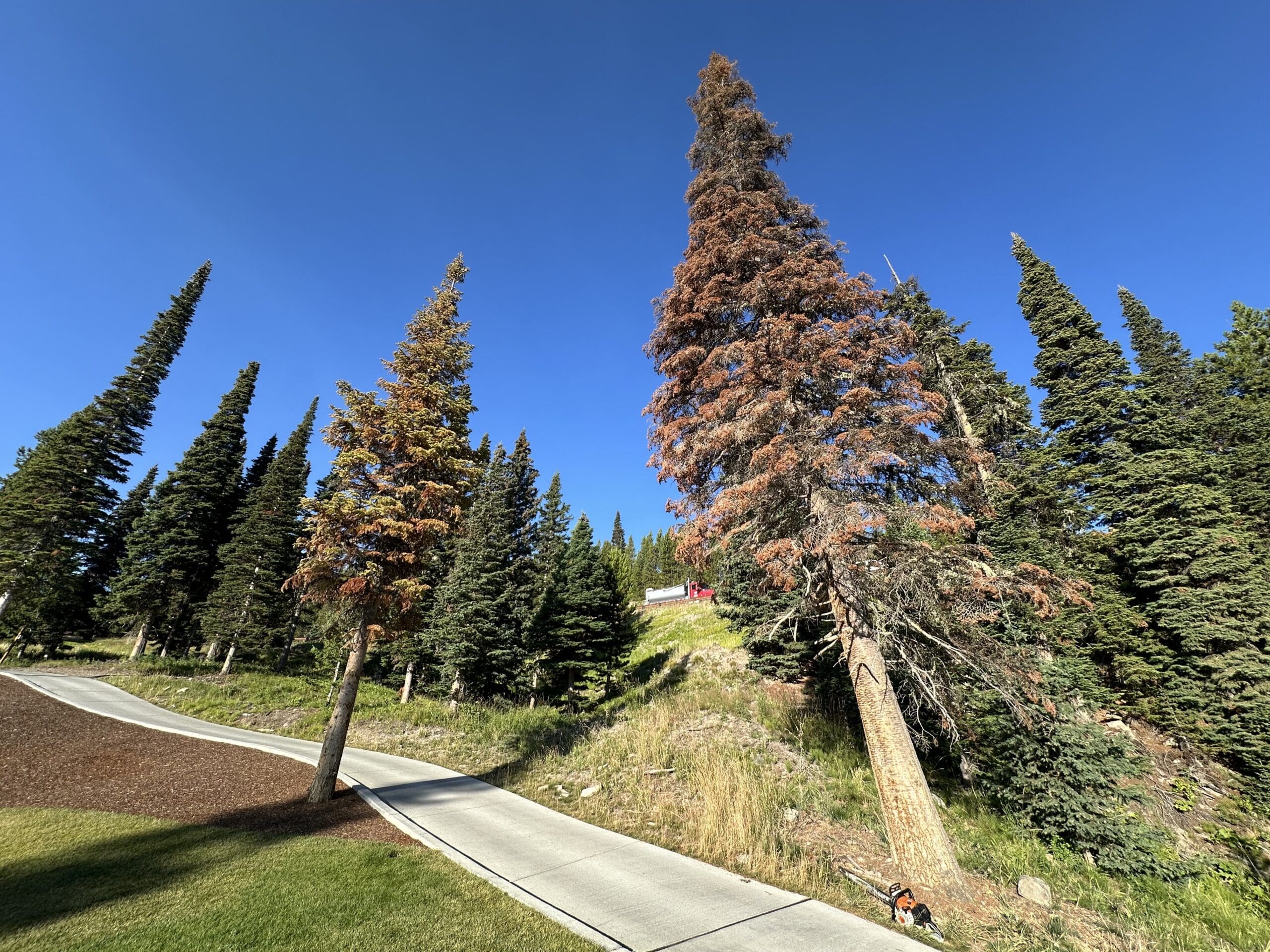
Clear here. Thin there. Cut the dead trees. Create defensible space. Check the box and move on.
That approach is understandable. Fire is scary. Insurance language is blunt. County guidelines are simplified on purpose. When risk feels urgent, people want clarity and certainty.
But defensible space was never meant to be the finish line.
It was meant to buy time.
In fire, time is everything. Time for firefighters to assess conditions. Time for engines to move safely. Time for fire behavior to moderate instead of explode. Defensible space slows the system down enough for better decisions to be made.
That matters. It saves lives.
And also, if that is where the thinking stops, we miss the bigger opportunity entirely.
Forests are not static. They are not lawns. They are not problems to be erased or fuel loads to be wiped clean. They are living systems shaped by disturbance, climate, soil, water, aspect, and time. When we treat mitigation as a one-time intervention instead of a long-term relationship, we trade resilience for convenience.
Firebreak Management did not start as a forestry company in name. It became one in practice.
Over time, the work demanded it.
Over time, patterns started to emerge. The properties that held up best through wind events, drought stress, and fire seasons were rarely the ones cut the hardest. They were the ones treated with intention. Thoughtful spacing. Species diversity. Attention to how the understory was behaving, not just how it looked. Wildlife movement kept intact. Soils protected. Regeneration planned for, not left to chance.
That is not accidental. That is forestry.
True mitigation and true stewardship are not opposites. They are partners. When done well, they reinforce each other. A forest designed with fire in mind is often a healthier forest overall. One that moves fire along the ground instead of into the canopy. One that recovers faster after disturbance. One that supports wildlife instead of fragmenting it.
Long-view forestry asks different questions.
Not how much can we remove, but what should remain.
Not how fast can we get through this, but what does this land need over time.
Not what looks clean today, but what will function well in ten, twenty, fifty years.
This kind of work is quieter. It does not always look dramatic at first glance. Sometimes it even looks incomplete to an untrained eye. That restraint is intentional.
Forests need room to breathe. They also need anchors. Old trees. Seed sources. Structural diversity. Patterns that echo what would exist here without us.
Private landowners are in a powerful position. The choices made on individual parcels shape entire watersheds, wildlife corridors, and fire behavior across landscapes. Working in places like Big Sky, where private land backs up to public forest and wildlife corridors do not stop at property lines, that long view matters even more.
When land is treated as a living system instead of a liability, it becomes part of the solution rather than something firefighters must defend at all costs.
That shift matters deeply to us.
We think in decades, not seasons. We plan work that can be revisited and refined, not finished and forgotten. We build defensible space as a foundation, then layer stewardship on top of it. The goal is not control. The goal is resilience.
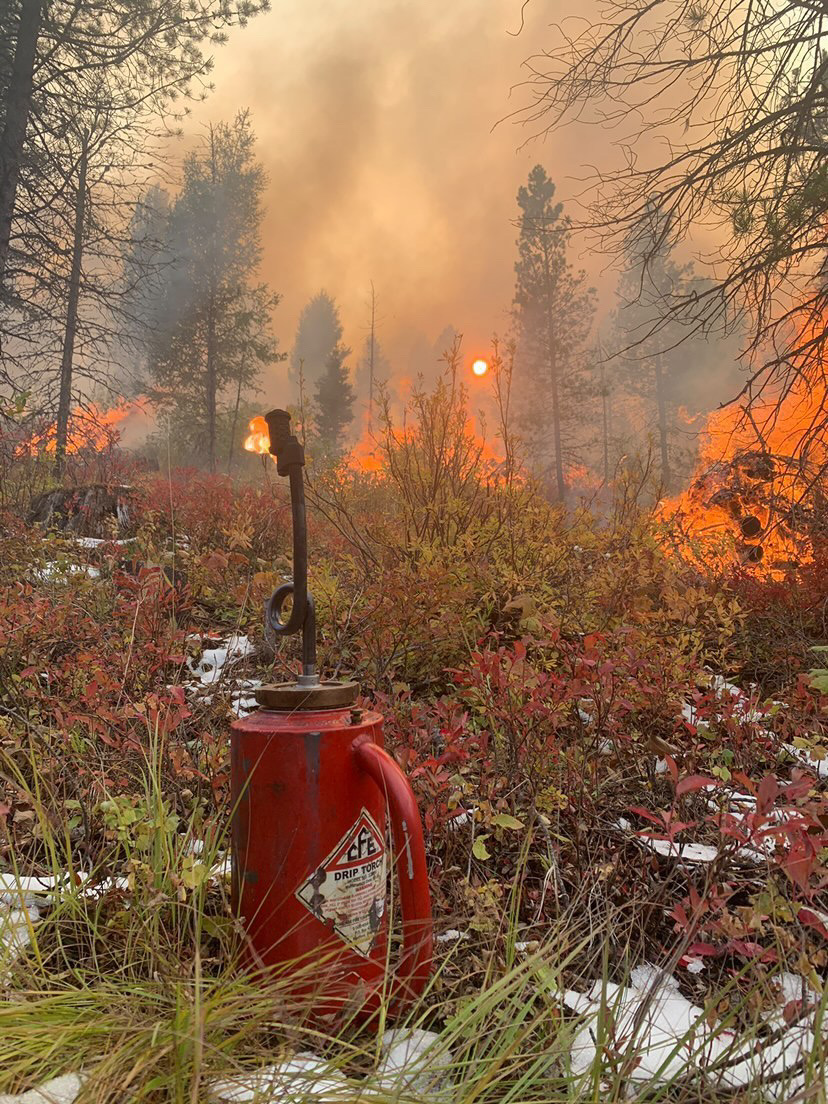
Fire will always be part of this landscape. The question is not whether it comes, but how it moves, how intensely it burns, and what is left standing afterward.
Defensible space gives firefighters a fighting chance.
Forestry gives the land one.
That is the difference between reacting to risk and designing for the long term.
And that is the work we are committed to doing.