Heavy smoke in the valley does not mean a fire is close to your property, and a clear sky does not mean you are safe. Actual wildfire risk depends on the fuels, terrain, and conditions on your own land, not on how far you can see out your window that day.
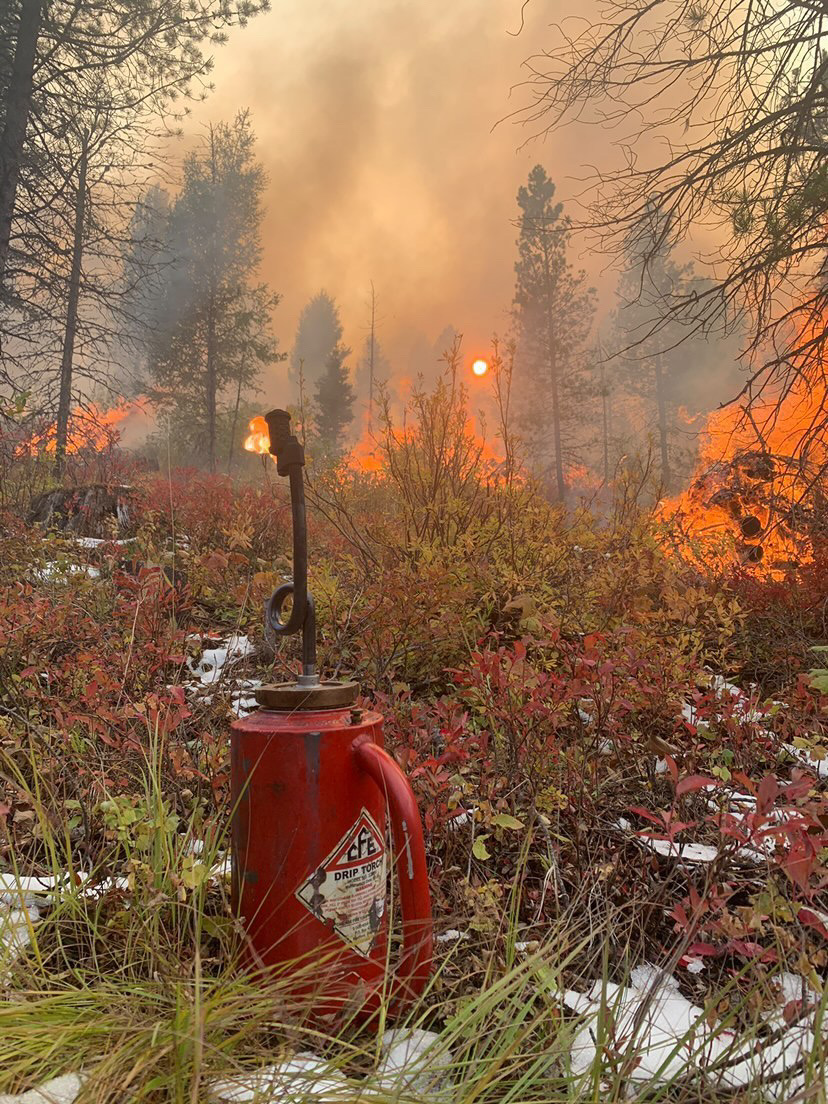
As of August 13, 2026, smoke season is not an abstract seasonal shift, it is the actual air outside. There is ash on the cars most mornings, the smell of wildfire sits in the air every evening, and by late afternoon the light over Big Sky turns the kind of orange that makes people nervous. The smoke sitting this thick over Bozeman and Big Sky is coming from fires burning in the Beaverhead-Deer Lodge National Forest, a few hours south of here, not from anything burning close to home. Those fires have already taken out the main chairlift at Maverick Mountain and are threatening Elkhorn Hot Springs, places a lot of us have skied and soaked in for years. Every year around this time we get calls from people who are certain a fire has started somewhere near them, because the sky says so. Most of the time, it has not. Driving home from a job site not long ago, our crew watched smoke pumping across the sun so dense it looked like something had ignited near Three Forks or Townsend, both closer to us than the actual fire. It had not. That gap, between what the sky suggests and what is actually happening on the ground, is exactly what this is about.
Most landowners read the sky as their risk indicator, because it is the most obvious thing in front of them. It makes sense. Smoke is dramatic, visible, and it changes how the whole day feels. But smoke tells you about atmospheric conditions somewhere upwind, not about the actual wildfire risk sitting on your own acreage. A property with dense ladder fuels, dry grass right up against the house, and no real defensible space can be at serious risk on a perfectly clear, blue sky day. A well treated property with good spacing between the canopy and the ground fuels can sit under the kind of heavy smoke drifting up from the Beaverhead-Deer Lodge fires right now and be no more at risk than it was the week before.
This cuts both ways, and both directions matter. Smoke can travel far past the fire that produced it, settling into valleys and staying trapped there for days depending on wind and inversion patterns, which is exactly why Bozeman and Big Sky can go thick with haze from a fire burning a few hours away, close enough to smell but nowhere near close enough to reach either town. And the reverse is just as real. Clear skies during a dry stretch with low relative humidity and high winds can be the most dangerous conditions of the entire season, even though nothing about the day looks alarming from a porch chair.
What actually determines risk on a given property is not visibility, it is the home ignition zone. Fine fuels curing out near a foundation, a woodpile stacked against a shed wall, ladder fuels climbing back into lower branches after a wet spring, the aspect of a slope and which direction it faces the afternoon sun. None of that shows up in the color of the sky. It shows up in a walk around the property, paying attention to the same things a fire would encounter if it arrived.
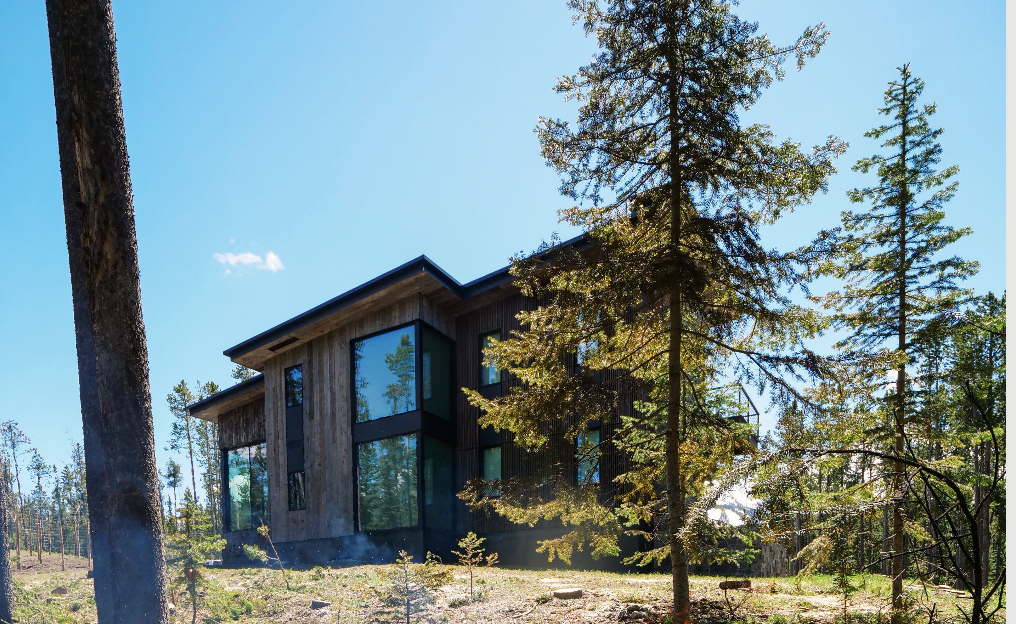
We tell clients the same thing every August. Watch the red flag warnings, not the haze. A red flag day means low humidity, high wind, and dry fuels are lining up at the same time, which is a far more honest predictor of danger than how far you can see across the valley. Pair that with knowing your own zones, what is treated, what has grown back, what is still exposed, and you have something closer to an actual risk picture than anything the sky will tell you on its own.
None of this means smoke should be ignored. Heavy smoke still matters for health, for visibility on the roads, for knowing when to keep kids and pets inside. It just is not the same question as whether your property is at risk if a fire does start nearby. Those are two different things asking to be answered by two different sets of information, and treating them as the same question is how a family ends up anxious on a smoky but otherwise low risk day, and unconcerned on a clear day that actually carries the most danger of the season.
The firefighters who respond to a fire near Big Sky or Bozeman will be working with the conditions on the ground that day, not the smoke that happened to be in the valley the week before. What a property looks like up close, whether the fuels have been managed and the zones around the home actually hold up, is what shapes how that response goes. That is the risk worth paying attention to, long before the sky ever tells you to.
If you are not sure whether your property’s actual risk matches what the smoke outside has you feeling, a walk through your home ignition zone will tell you more than the sky will.
FAQ
Does heavy smoke in the valley mean a fire is nearby? Not necessarily. Smoke can travel hundreds of miles from its source and settle into a valley like this due to wind patterns and temperature inversions, even when the originating fire is nowhere close to Montana.
What is causing all the smoke in Big Sky and Bozeman right now? The heavy smoke settling over Big Sky and Bozeman is coming from wildfires burning in the Beaverhead-Deer Lodge National Forest, a few hours south of town. Those fires have already destroyed the main chairlift at Maverick Mountain and are threatening Elkhorn Hot Springs, but they remain a significant distance from Big Sky and Bozeman itself.
Why can I smell smoke but not see a fire near Big Sky or Bozeman? Smoke often arrives from fires burning elsewhere in the region, carried by wind and trapped near the ground by local weather patterns. Right now, the smoke over Bozeman and Big Sky is coming from the Beaverhead-Deer Lodge fires, not from anything burning close to home.
How can I tell my actual wildfire risk during smoke season? Actual risk comes from conditions on your specific property, including fuels near the home, defensible space, and the health of your home ignition zone, along with active fire weather like red flag warnings. Visibility and smoke thickness are not reliable indicators of your property’s risk.
Does clear sky mean my property is safe from wildfire? No. Some of the most dangerous fire weather, low humidity, high wind, and dry fuels, occurs on days with clear skies and no visible smoke at all. Clear conditions can precede rapid fire growth if a fire does start nearby.
What should I check instead of watching the smoke? Red flag warnings from the National Weather Service are a more reliable signal of active fire danger than visibility. Pairing that with a current understanding of your property’s defensible space and fuel conditions gives a much more accurate risk picture.
How far can wildfire smoke travel? Wildfire smoke can travel hundreds of miles from its source, depending on wind direction, atmospheric stability, and terrain. Valleys like this one are especially prone to trapping smoke that originated far outside the region.