The challenge
This approximately 13 acre treatment area sits within a larger, actively managed forest that had been logged decades earlier, requiring a new approach focused on long-term forest health and function. The original entry prioritized timber value. This project was approached with a different objective: improving long term forest health, species balance, and overall function.
The property includes varied terrain, from gentle benches to steep slopes exceeding 40 percent. A riparian corridor runs through the center of the site and required careful integration into the treatment plan. Privacy was also a priority, with neighboring properties nearby and a clear desire to retain visual separation while still improving forest conditions.
The project was funded through a grant administered by the Natural Resources Conservation Service. While wildfire mitigation was included, the primary driver was ecological stewardship rather than fuels reduction alone.
What was done
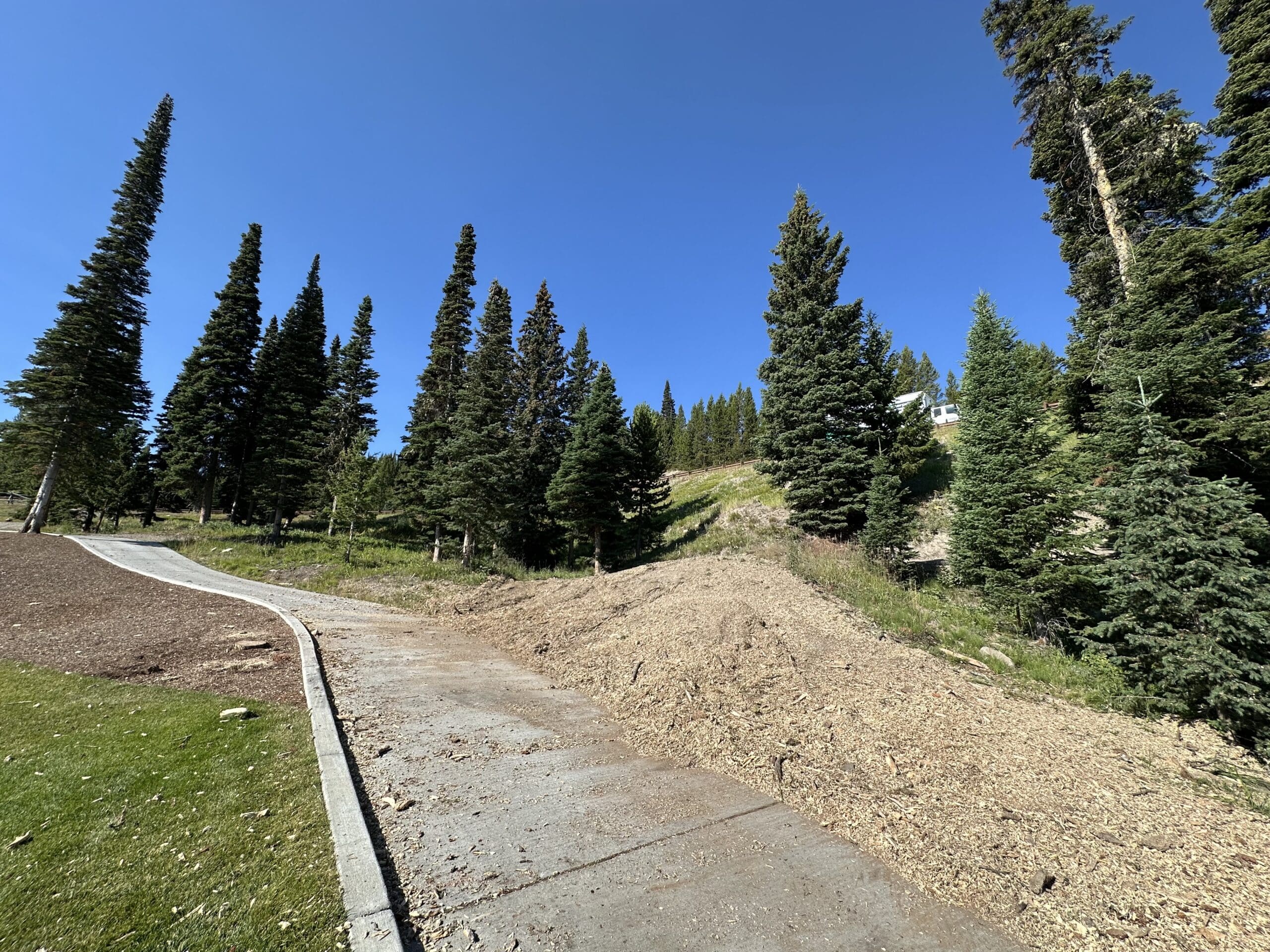
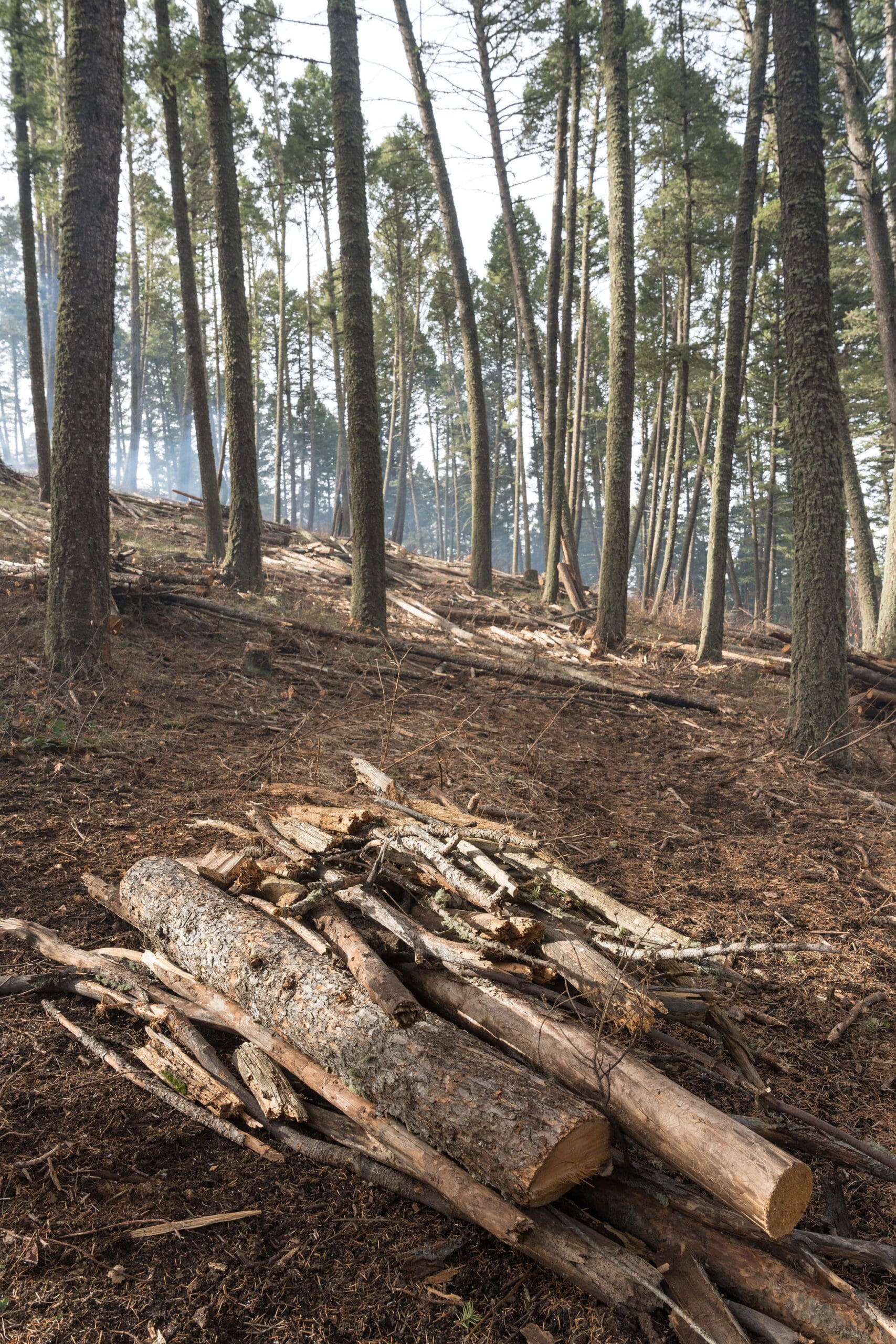
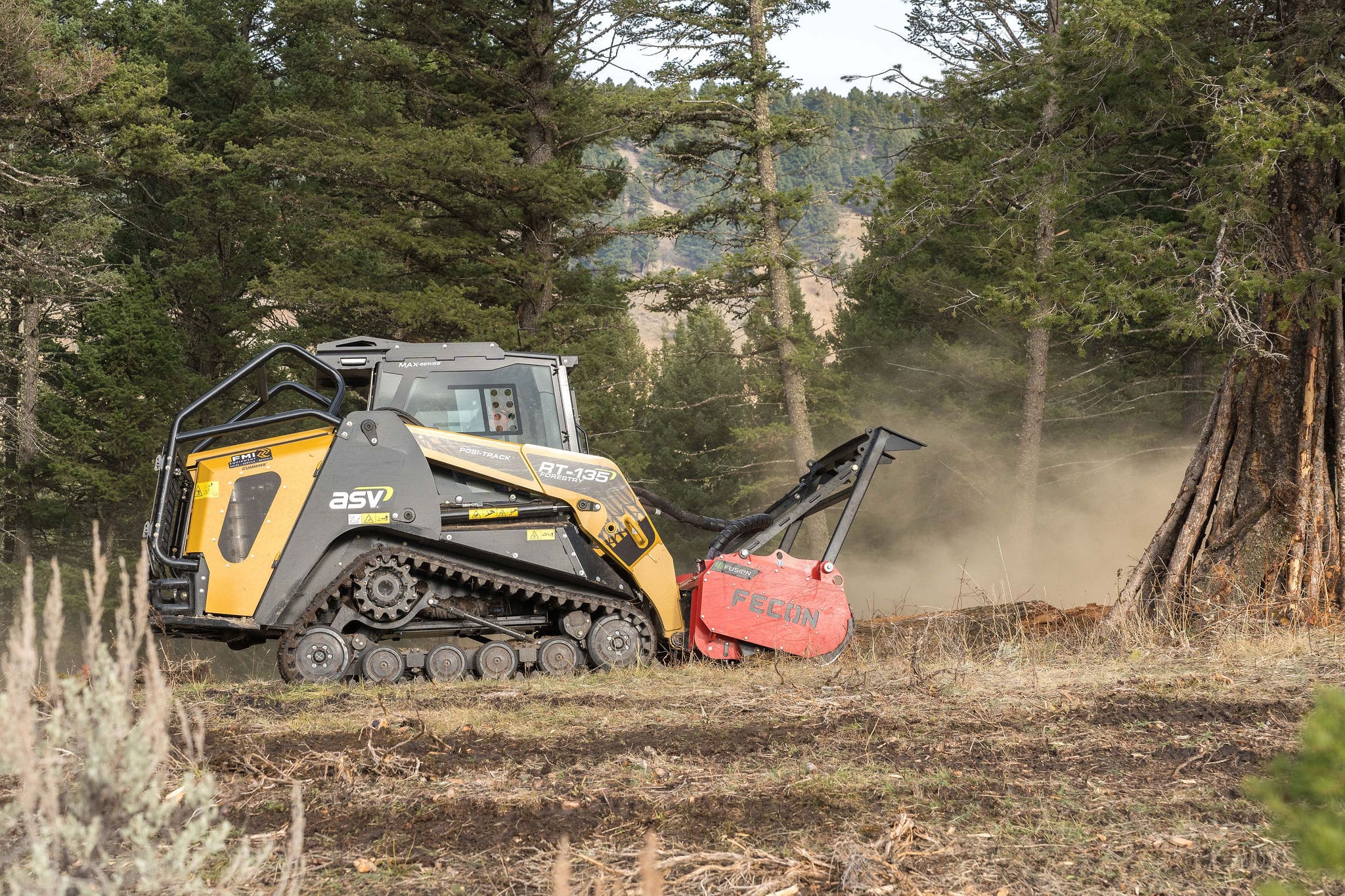
Treatment focused on selective thinning and mastication, with no pile burning used on the property. Trees were removed based on species composition, spacing, and forest health rather than short term timber value. Large material was sent to regional mills, and significant volumes of firewood were sold and distributed locally, returning value back into the project.
The forest was managed to support diversity. Dominant Douglas fir was selectively thinned to release healthy subalpine fir, lodgepole pine, larch, ponderosa pine, and spruce that had been established through years of intentional replanting and care.
The riparian corridor was left intact, with treatment designed around it rather than through it. Dense privacy buffers were intentionally retained along select boundaries to respect neighboring properties while still achieving broader forest health objectives. Wildlife movement and habitat continuity were maintained throughout the site.
Access was improved through the creation of a ridgeline skid road, allowing full circulation and long term manageability without fragmenting habitat. This access now supports year round use, recreation, and ongoing stewardship.
Work progressed in phases across multiple seasons. As winter conditions set in, the decision was made to pause final work rather than risk soil disturbance and damage to the land. While additional progress could have been made, completing the project under poor ground conditions would have compromised site integrity. Final cleanup is scheduled to resume once conditions allow.
Throughout the project, the landowners remained engaged while trusting field level judgment, allowing the work to move forward efficiently and intentionally.